
Oct 2, 2026 · @Keith
Light wheels make a car faster. That part is true, and it's why every racer eventually asks the same question: how much does it weigh?
But weight is only one line on a wheel's spec sheet. A wheel that saves two pounds and cracks at the launch, flexes in a corner, or won't clear your calipers isn't a racing wheel. It's an expensive lesson.
The best racing wheel isn't simply the lightest one. It's the lightest wheel that is still strong enough, stiff enough, and built to fit your car exactly. Here's why each of those matters.
Why weight matters in the first place
Wheel weight counts twice. First, it's rotational mass: every time the car accelerates or brakes, the engine and brakes have to spin the wheel up or slow it down, not just move it forward. Pound for pound, weight in a wheel costs you more than weight bolted to the chassis.
Second, it's unsprung mass: weight that sits below the springs. The lighter the wheel, the faster the suspension can follow the road. That means better traction over bumps, more consistent tire contact in corners, and a car that settles quicker.
So yes, cutting wheel weight is worth chasing. The question is what you give up to get it.
Where the weight sits matters as much as how much
Two wheels can weigh the same on a scale and feel completely different on the car. The reason is rotational inertia: weight near the outer edge of the wheel is far harder to spin than weight near the hub.
Think of a figure skater pulling in their arms to spin faster. A wheel with mass packed toward the center accelerates more easily than one with the same mass out at the barrel and lip.
That's why smart wheel design is about putting material exactly where the loads are, and taking it away everywhere else. A total weight number on a product page doesn't tell you that story.
Strength and stiffness: what a racing wheel needs to survive
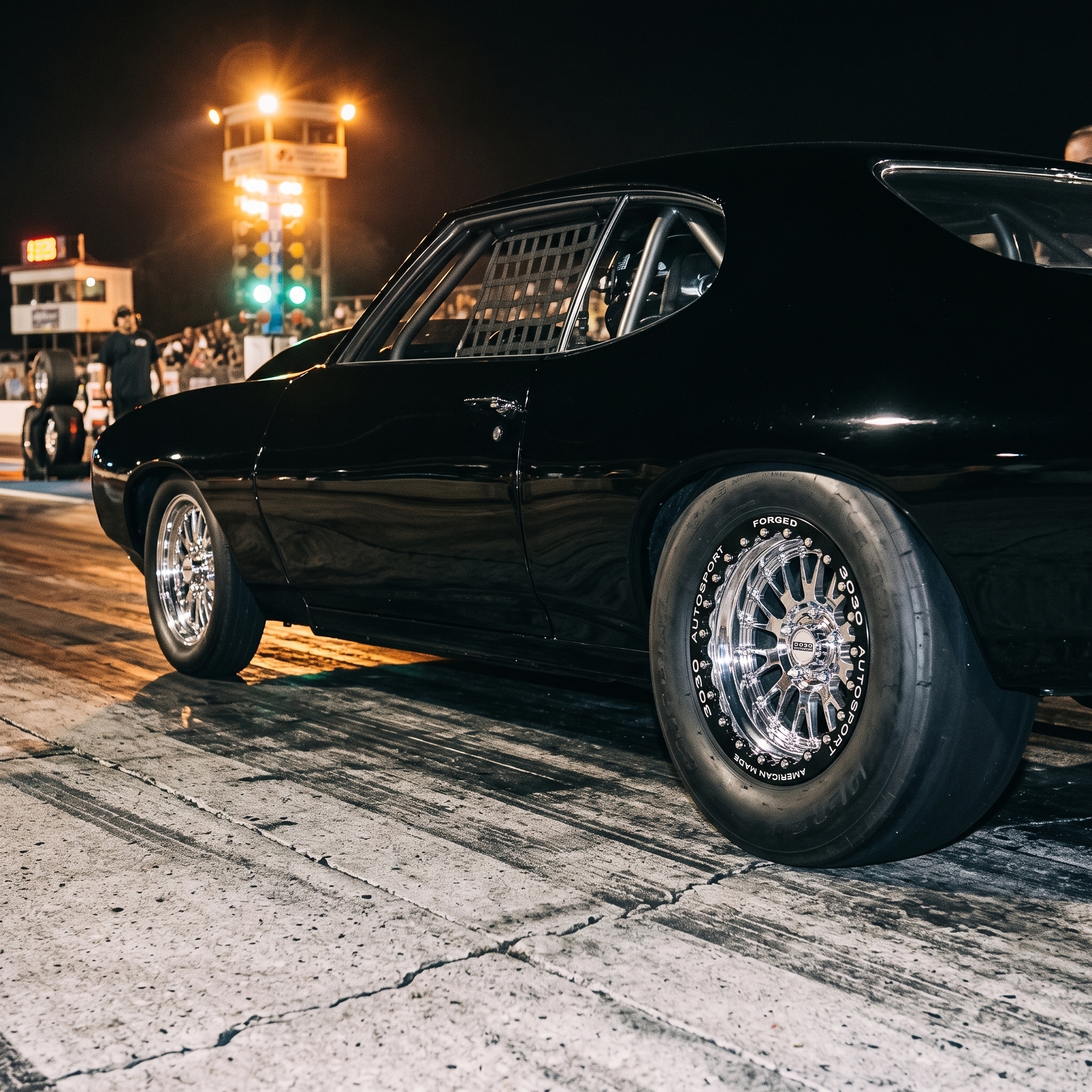
A racing wheel lives a hard life. A drag car's rear wheels take a violent torque spike at the hit. A track car's wheels take sustained side load through every corner, lap after lap. Trucks and pro-touring builds add curb strikes, potholes, and real-world abuse.
Shave too much material and two things happen. The wheel gets weaker, so it can bend or crack under load. And it gets more flexible, so it deflects in corners. Flex makes steering feel vague, upsets the tire's contact patch, and can even let the wheel touch the caliper under hard cornering.
A stiff wheel keeps the tire where the suspension geometry says it should be. That's grip you don't have to tune for. In many cases, a slightly heavier, stiffer wheel will put down a quicker lap than a featherweight that flexes.
Fitment: the lightest wheel is useless if it doesn't fit
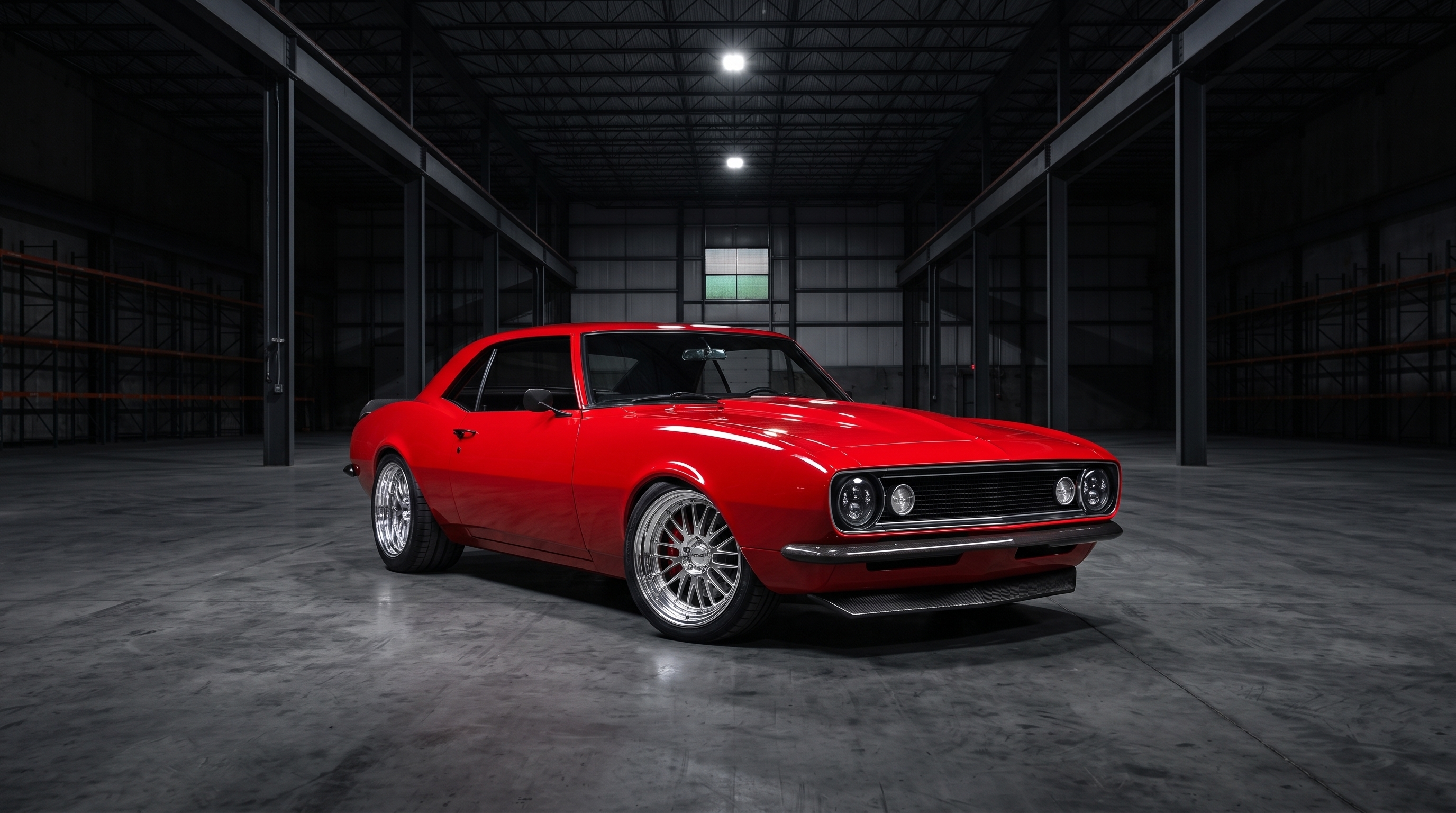
No weight savings matter if the wheel can't clear your brakes or sit right in the fender. Big race calipers need room. Wide tires need the right backspace to avoid rubbing on suspension parts or bodywork.
Off-the-shelf wheels are built to an average car. Racing cars are anything but average. A wheel made to your exact backspace, offset, and caliper clearance lets you run the brakes you want, the tire you want, and the stance you want, without spacers or compromises.
At 3030 Autosport, backspace is offered in quarter-inch increments within each size's range, and choosing the exact number you need never changes the price.
Why forged aluminum gets the balance right
This is where how a wheel is made matters more than any single number. Cast wheels are formed by pouring molten aluminum into a mold. To be strong enough, they typically need extra material, which adds weight.
Forging starts with a solid billet of aluminum and shapes it under enormous pressure. That process aligns and tightens the metal's grain structure, making it stronger and more resistant to fatigue. Because the metal is stronger, less of it is needed. You get a wheel that is lighter and stiffer and tougher, not a trade between them.
That's why forged aluminum is the standard for serious performance builds, and why it's the only thing we make.
Matching the wheel to the job
The right balance of weight, strength, and fit depends on what the car actually does.
- Drag racing: Launch loads are brutal, and race brakes need clearance. Our Drag Ops (2-piece welded, fits inside a 13.1" inner rim diameter) and Eliminator (3-piece modular, 14.5" inner diameter) are built for exactly that, and both are made to order for each car.
- Track and autocross: Sustained cornering loads reward stiffness as much as low weight. Our MOD3 3-piece wheels are built for track performance.
- Muscle car and pro-touring: These builds need to look right and drive hard. Series G (step lip) and Series X (reverse-profile deep lip) 2-piece forged wheels cover both.
The lightest wheel on paper isn't automatically the right wheel for any of these. The right wheel is the one engineered for the loads it will see.
The whole story
Light weight is a real advantage, but it's the start of the conversation, not the end. A true racing wheel is light where it counts, strong where it's loaded, stiff enough to hold the tire steady, and built to fit your car down to the quarter inch.
That's the wheel we build at 3030 Autosport: custom forged aluminum, made for your application, not an average one.